What Corrosion Tests Are Salt Spray Test Chambers Mainly Used For? Helping Companies Predict Outdoor Salt Corrosion Failure Risks in Advance
Author:LINPIN Update Time:2026-10-29 Source:LINPINIn modern industrial manufacturing, product durability and reliability are central to a company's competitiveness. Especially in corrosive environments such as coastal areas, high-humidity regions, or areas with industrial pollution, metal components and surface-treated products are prone to premature failure due to salt erosion, leading to customer complaints, rising warranty costs, and even damage to brand reputation. How can this problem be predicted and addressed in advance? As a standardized accelerated corrosion testing device, the salt spray test chamber provides companies with a scientific and repeatable means of evaluation.
Core Test Types of Salt Spray Test Chambers
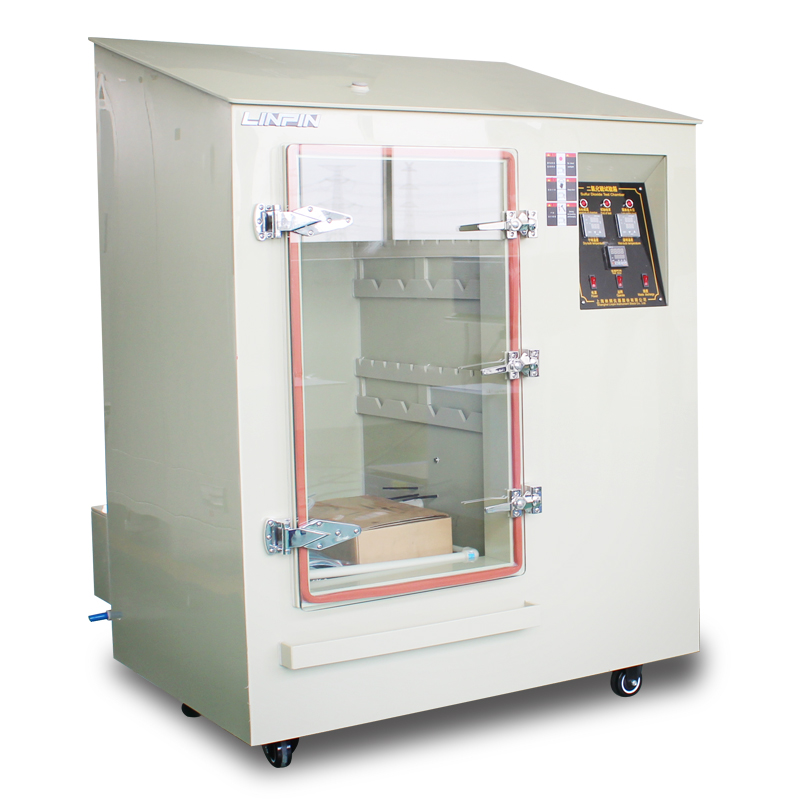
Salt spray test chambers primarily simulate salt spray conditions found in natural environments to conduct accelerated corrosion tests on materials or finished products. Common test types include:
Neutral Salt Spray Test
According to standards such as ASTM B117 and ISO 9227, a 5% sodium chloride solution is continuously sprayed to simulate a general coastal atmospheric environment. This test is widely used for corrosion resistance screening of metal coatings, automotive components, and electronic parts, helping companies determine the effectiveness of basic protective layers such as electroplating and spray coating.
Cyclic Corrosion Test
Closer to real-world conditions, this test alternates between salt spray, drying, and humid stages (e.g., Prohesion™, CCT-1 standards). It can simulate dynamic conditions such as day-night temperature differences and humidity changes, providing more valuable reference for comprehensive evaluation of products in automotive, aerospace, and outdoor building materials industries.

Acidic Salt Spray Test
By adding acidic substances (such as acetic acid) to simulate industrial pollution or acid rain environments, this test is suitable for evaluating the chemical corrosion resistance of aluminum, alloys, and other materials.
Scientific Basis for Predicting Outdoor Salt Corrosion Risks
The value of salt spray testing lies in correlating accelerated experiments with actual service life. For example, if a galvanized component shows no red rust after 500 hours of neutral salt spray testing, combined with historical data and environmental corrosion rate models, it can be inferred that the component may have a corrosion resistance of 5–10 years in a typical marine atmosphere. Although this correlation is not a precise conversion, it provides a quantitative comparative benchmark for material selection and process optimization.
An outdoor cabinet manufacturer once found that sheet metal parts without salt spray testing developed rust within one year of use in coastal areas, while improved-process products screened through 120 hours of salt spray testing operated stably for more than 5 years in the same environment. In this process, the test chamber helped the company identify the problem of insufficient coating thickness, avoiding a batch quality incident.
A Rational View of Testing Limitations
It should be noted that salt spray testing is an accelerated simulation, not a complete replication of the natural environment. Actual corrosion is also affected by factors such as ultraviolet radiation, mechanical wear, and the diversity of pollutants. Therefore, test results should be comprehensively assessed in combination with outdoor exposure data and user usage scenarios, avoiding over-reliance on a single indicator.
Salt spray test chambers are not a "universal predictor," but they are an important tool for companies to control product quality and reduce outdoor failure risks. Through standardized testing, companies can identify material defects and verify protective processes during the R&D stage, thereby reducing market return rates and enhancing brand trust.