From R&D to Mass Production: How Constant Temperature and Humidity Chambers Safeguard Product Quality Throughout the Process
Author:LINPIN Update Time:2025-12-05 Source:LINPINIn modern industrial manufacturing, the stability of product quality is central to a company's market presence. From initial design and development to final mass production, each stage faces potential challenges posed by environmental factors like temperature and humidity. As a key piece of equipment for environmental reliability testing, the constant temperature and humidity chamber acts as a "guardian" throughout this entire journey, ensuring products perform excellently even in real-world conditions.
R&D Phase: Precisely Validating Design Limits
During the initial R&D phase, constant temperature and humidity chambers help engineers quickly uncover design flaws by simulating extreme temperature and humidity conditions. Whether testing the resistance of electronic components to high heat and humidity or the stability of new materials in cold environments, these chambers provide reproducible and traceable data. This scientific validation approach significantly shortens development cycles and reduces the risk of costly re-engineering later due to design issues.
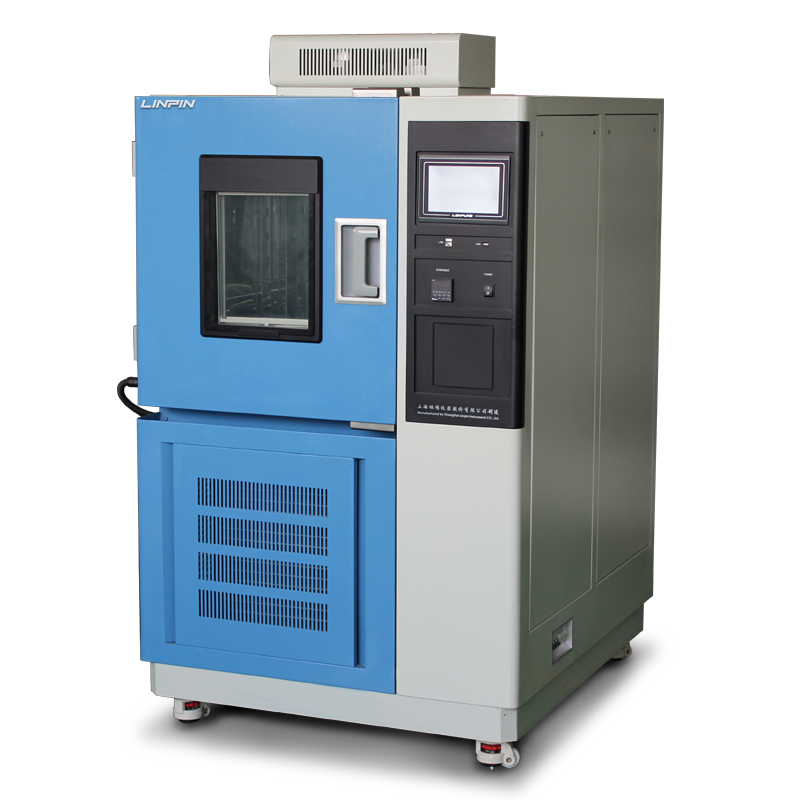
Pilot Verification: The Reliability Cornerstone for Small-Batch Production
As products move into the pilot stage—transitioning from the lab to the production line—the chambers come into play for prolonged reliability testing (e.g., temperature cycling, damp heat aging). They simulate the complex environments products might encounter during storage, transportation, and use. For instance, one home appliance manufacturer used a constant temperature and humidity chamber to subject its first batch of samples to a 500-hour high-temperature, high-humidity test. This allowed them to identify a defect in the circuit board's protective coating early on, preventing potential mass failures after full-scale production and avoiding significant losses.
Mass Production: Continuous Monitoring and Quality Consistency
During mass production, the role of the chambers shifts from "problem identification" to "quality monitoring." By regularly sampling products from the production line, companies can ensure every batch meets design standards. In the automotive parts industry, for example, some manufacturers integrate these chambers at the end of the production line to perform rapid thermal cycling checks on critical components. This ensures that finished products can withstand climate variations from arctic to tropical conditions. Such a fully controlled quality assurance system becomes a vital pillar of customer trust.
Technical Capability: Dual Assurance of Precision and Reliability
A high-performance constant temperature and humidity chamber is built on precise temperature and humidity control systems (e.g., PID algorithms), uniform spatial distribution design (temperature deviation ≤ ±0.5°C), and long-term operational stability. Data from authoritative institutions shows that rigorous environmental testing can reduce product failure rates after sale by over 30%. This is precisely why such equipment has become standard in high-demand industries like electronics, medical devices, and aerospace.
From R&D to mass production, constant temperature and humidity chambers use data-driven reliability verification to build a "firewall" for product quality. They are not just technical tools but also powerful testaments to a company's commitment to long-term excellence—only by building a solid quality foundation from the very beginning can a business achieve sustainable success in the competitive market.