What Key Corrosion Issues Does a Salt Spray Test Chamber Mainly Detect in Metal Products?
Author:LINPIN Update Time:2026-05-30 Source:LINPINIn the industrial manufacturing sector, the durability of metal materials directly impacts product lifespan, safety, and reliability. Corrosion is a major threat to metal products in natural environments, and the ability to resist corrosion is a key indicator of product quality. The salt spray test chamber is the core testing equipment used to simulate harsh corrosive environments and accurately evaluate the corrosion resistance of metal products.
1. Accurately Reproducing and Predicting the Future: The Core Value of Salt Spray Testing
Salt spray testing creates an accelerated corrosive environment, simulating in a short period the corrosion effects that would take months or even years to occur in real-world marine or chlorine-containing industrial environments. It primarily provides authoritative testing data for the following key issues:
-
Evaluating the Corrosion Resistance of Base Materials: For untreated metal raw materials (e.g., steel, aluminum alloys, copper alloys), salt spray testing directly assesses their inherent resistance to corrosion, providing critical data for material selection.
-
Validating the Effectiveness of Surface Treatment Processes: This is the most common application of salt spray testing. Whether it's electroplating (e.g., zinc plating, nickel-chromium plating), painting (liquid or powder coating), phosphating, anodizing, or Dacromet coating, how effective is the protection? Is the coating uniform and dense? Salt spray testing visually reveals weaknesses in protective layers, such as blistering, cracking, peeling, and rust.
-
Verifying Overall Product Protection Design: For finished products or assemblies made of multiple metal materials, salt spray testing evaluates whether different material junctions (e.g., riveted or welded areas) are susceptible to galvanic corrosion due to potential differences, thereby validating the robustness of the overall structural design.
-
Comparative Analysis and Quality Control: Using standardized test methods (e.g., Neutral Salt Spray NSS, Acetic Acid Salt Spray AASS, Copper-Accelerated Acetic Acid Salt Spray CASS), the corrosion resistance of samples from different suppliers or different production batches can be objectively compared. This serves as a powerful tool for incoming inspection and quality control.
2. The Cornerstone of Reliable Testing: Your Equipment Matters
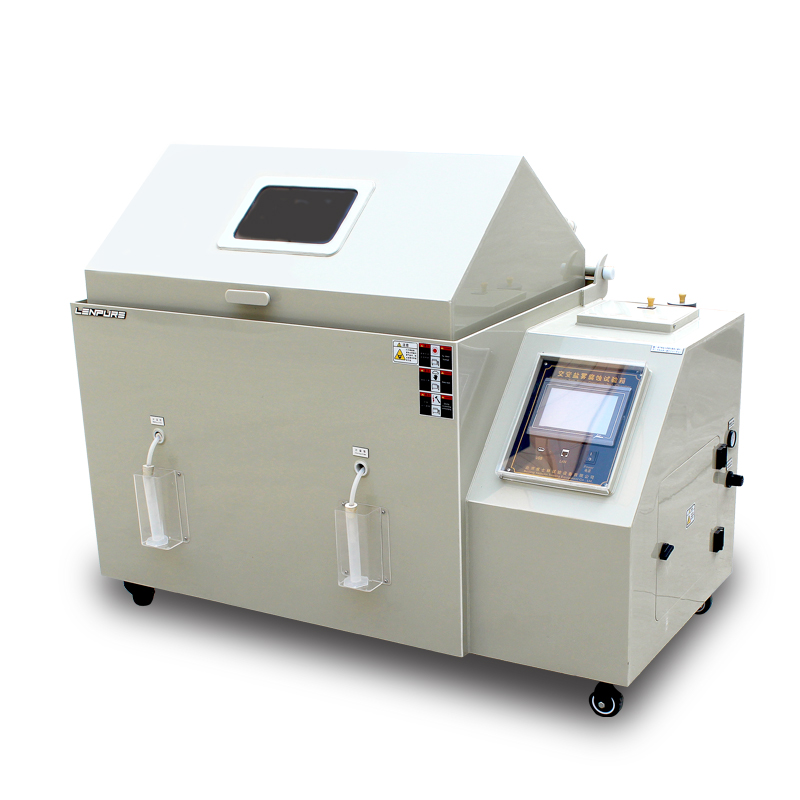
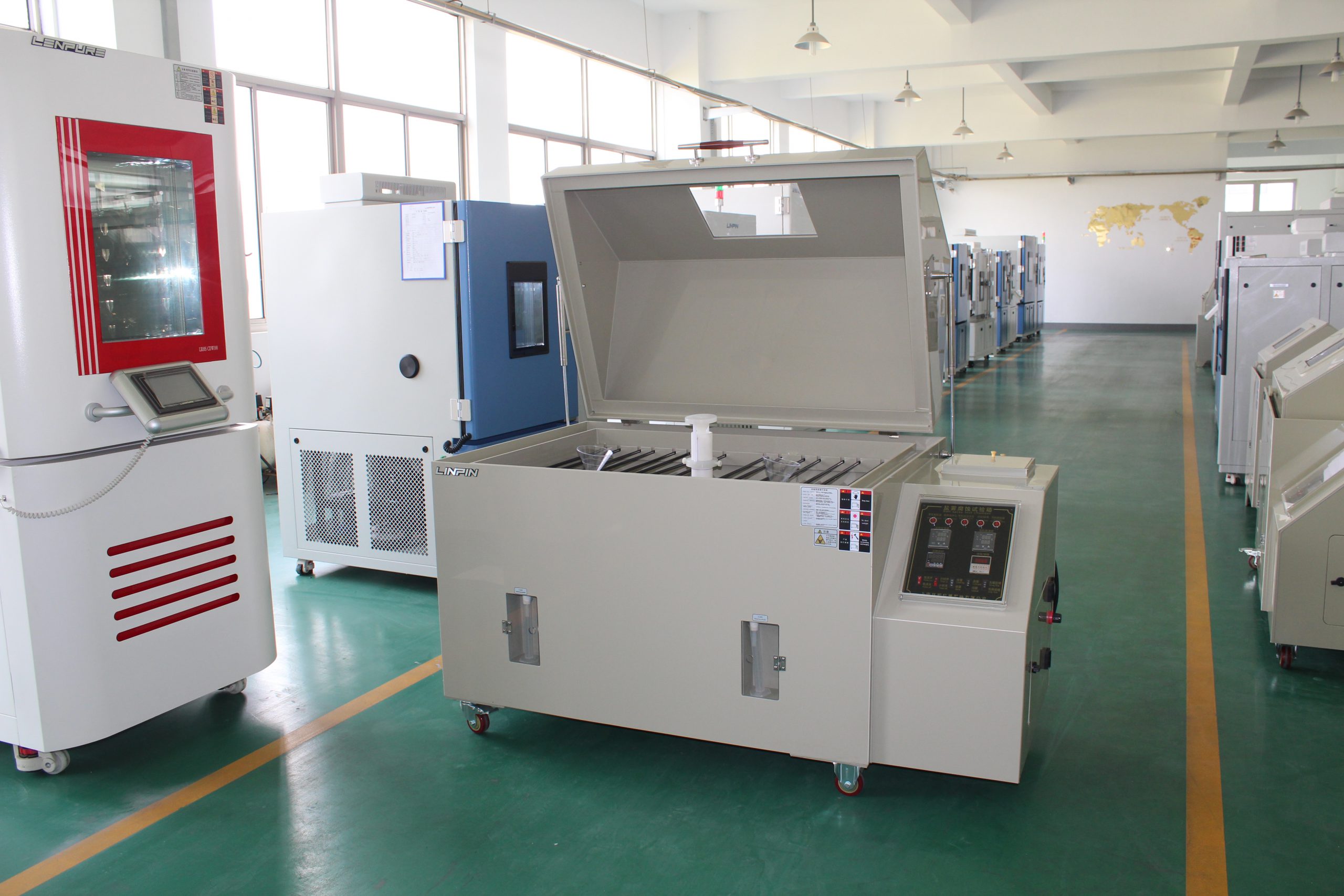
A stable, precisely controlled salt spray test chamber is the foundation of reliable test results. It requires a corrosion-resistant chamber structure, uniform spray distribution, precise temperature control, and consistent solution concentration. Professional equipment ensures that test conditions comply with national (e.g., GB/T) or international standards (e.g., ASTM, ISO), helping businesses:
-
Enhance Product Competitiveness: By identifying and addressing potential corrosion issues early, companies can significantly extend product lifespan in harsh environments and build greater customer trust.
-
Reduce After-Sales Risks: Effectively preventing premature failures and batch quality issues due to corrosion protects brand reputation and minimizes financial losses.
-
Drive Technological Advancement: By providing a scientific evaluation method for new material development and process improvements, salt spray testing promotes product iteration and innovation.
In the modern industrial landscape, where quality is paramount, the salt spray test chamber has evolved beyond a simple testing tool. It has become a strategic asset for building core product competitiveness and achieving high-quality manufacturing. By transforming unpredictable natural corrosion into quantifiable, scientific laboratory data, it provides a solid foundation for decision-making and quality assurance.