How Much Does Humidity Affect Test Results in Thermal Shock Chambers?
Author:LINPIN Update Time:2026-04-25 Source:LINPINIn the field of environmental reliability testing, thermal shock chambers are essential for evaluating a product's ability to withstand extreme temperature changes. However, engineers often overlook a potential variable—humidity. While not directly part of the temperature cycling process, humidity can profoundly impact the accuracy and authenticity of test results.
1. Humidity: The Invisible "Interfering Factor"
Standard thermal shock testing aims to rapidly transition products between extreme temperatures to assess the reliability of materials, structures, and solder joints under sudden stress. The air inside the chamber acts as the medium for heat transfer, and its humidity level determines its thermal capacity and conductivity. Deviations from standard humidity settings can trigger a chain reaction:
- Altered Heat Transfer Efficiency: Moist air generally has a higher heat capacity than dry air. This can cause the actual temperature change rate experienced by the sample to deviate from the preset program, potentially affecting overshoot or stabilization times.
- Potential Condensation Risk: During the rapid transition from the high-temperature zone to the low-temperature zone, if the sample's surface temperature drops below the dew point, moisture in the air can condense on the product. For electronic components or metal parts, this introduces risks like electrochemical corrosion or insulation failure—failure modes not intended by the pure temperature shock test.
- Misjudgment of Material Properties: Some polymer materials are hygroscopic (moisture-absorbing). Fluctuations in humidity can alter their physical properties (e.g., expansion coefficient), potentially leading to incorrect conclusions about their temperature resistance during testing.

2. Precision Control for Authoritative Results
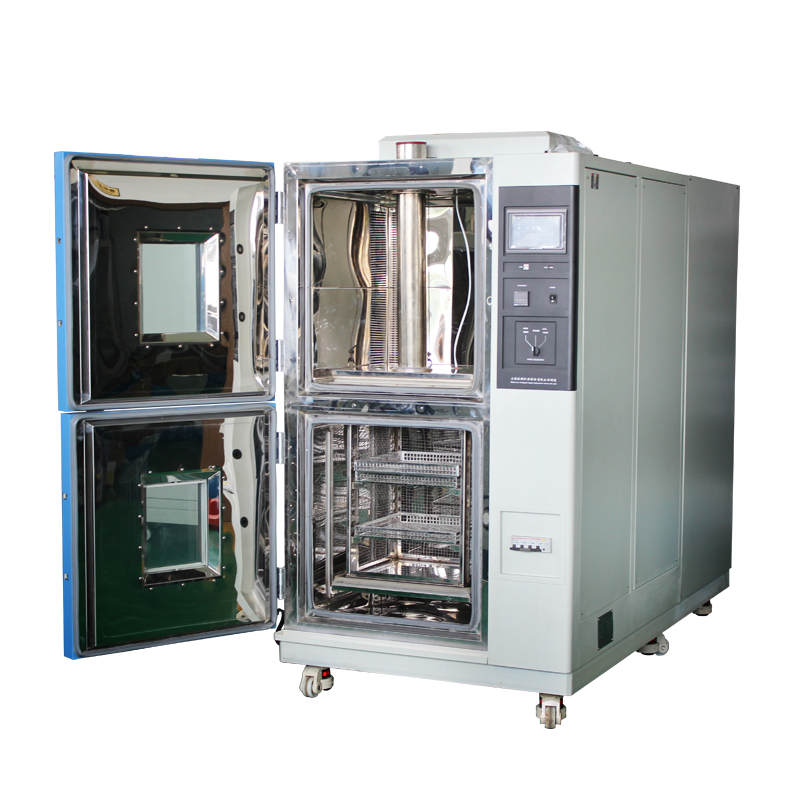
The value of a high-performance thermal shock chamber lies not only in its rapid temperature transition capabilities but also in its precise control over all environmental variables. Leading manufacturers employ specific technologies to address humidity:
- Creating a Low-Humidity Environment: Built-in nitrogen purge systems or dry air units can reduce chamber humidity to a low level before testing begins. The chamber is then sealed for the test duration, effectively isolating the test sample from external moisture.
- Dew Point Monitoring and Alerts: Integrated, high-precision dew point sensors continuously monitor the chamber atmosphere. If there's a risk of condensation, the system alerts operators to adjust parameters.
- Airtight Structural Design: Optimized sealing techniques and high-quality insulation materials minimize the infiltration of external humidity, ensuring consistent test conditions.
3. Delivering Core Value to Customers
Understanding and controlling humidity's influence is crucial for the success of testing projects and the accuracy of quality assessments.
- Enhanced Result Reliability: Eliminating humidity interference ensures that any failures truly reflect the product's temperature endurance limits, preventing costly misjudgments during research and development.
- Improved Data Comparability: A stable, low-humidity baseline allows for consistent comparison of data across different test batches and laboratories, strengthening the authority of test reports.
- Expanded Testing Capabilities: For clients with strict humidity control requirements (e.g., in automotive electronics, aerospace), chambers with effective humidity management better meet their rigorous standards.
In the pursuit of ultimate reliability, details make the difference. While humidity control might seem like a minor detail, it is a key indicator of a thermal shock chamber's performance and the manufacturer's technical expertise. Choosing equipment that effectively manages humidity adds a layer of "insurance" for your product quality. It ensures that every thermal shock test is precise and trustworthy, providing a solid foundation for your product's superior performance.